Reflection on the Photosynthesis Hackathon in Ghana
In the week of March 9, the first-ever photosynthesis hackathon was held in Accra, Ghana

In the week of March 9, the first-ever photosynthesis hackathon was held in Accra, Ghana! This unique event was made possible by RWTH Aachen University, the International Institute of Tropical Agriculture (IITA), Cambridge University, the Mastercard Foundation, and the Jan IngenHousz Institute (JII). The goal was to spur the development of innovative methods for studying the link between genetic variation and photosynthetic efficiency using real-world datasets. To tackle this challenge, the hackathon brought together participants from a variety of disciplines: plant breeders, crop physiologists, statisticians, and data scientists.
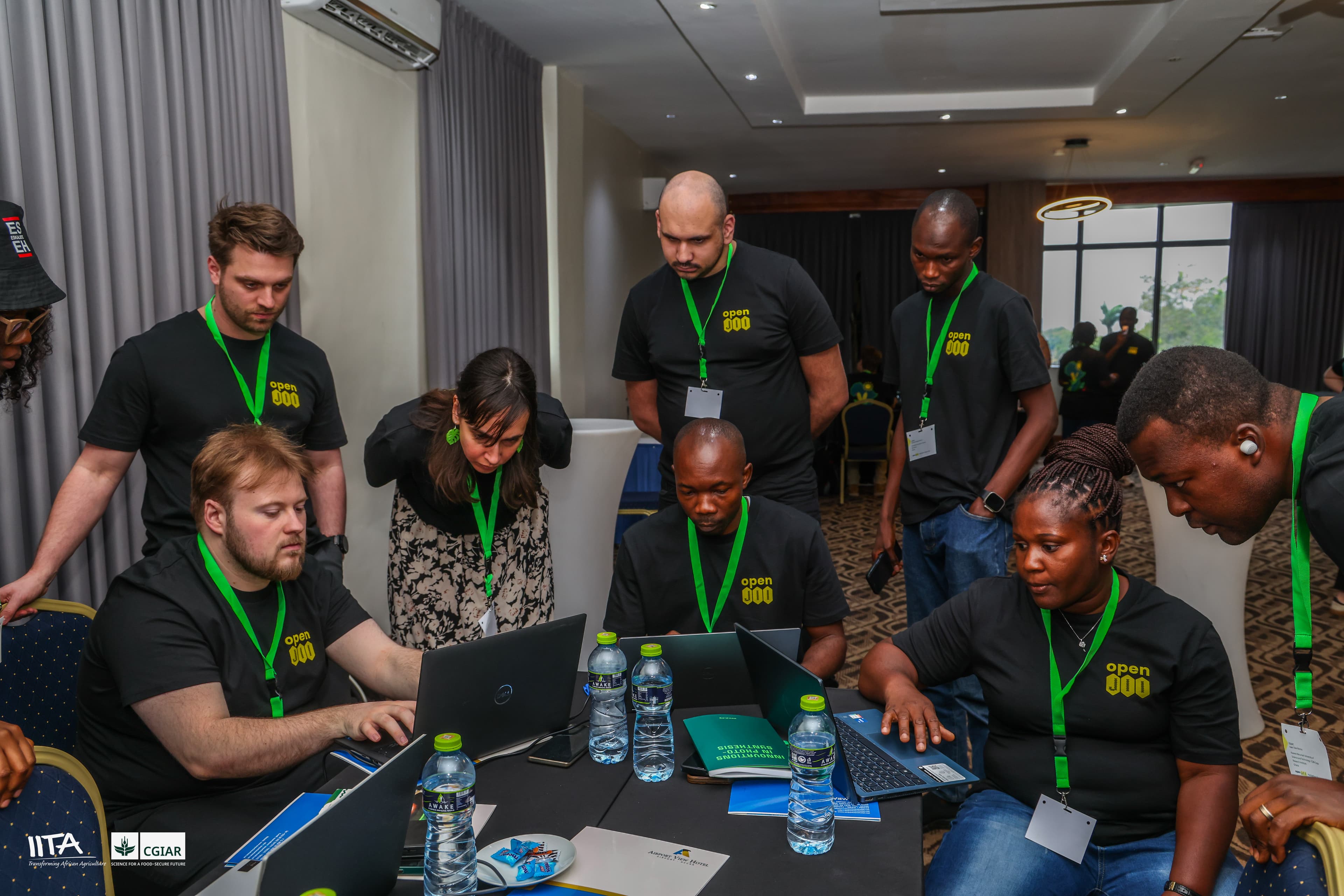
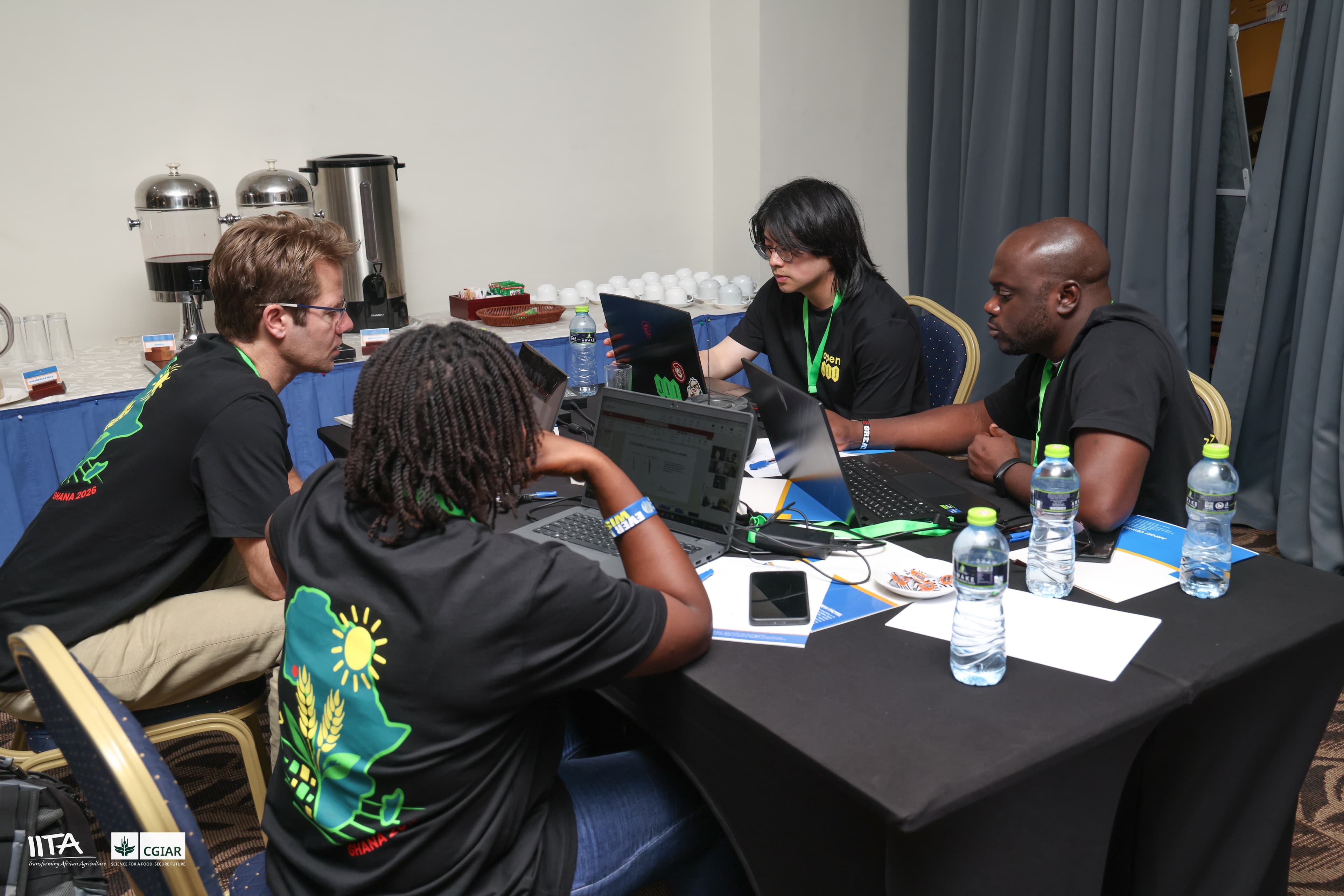
The event kicked off with lectures from David Kramer (JII), Johannes Kromdijk(Cambridge University), Tom Theeuwen (JII), Olivia Kacheyo (JII), and Olakunle Opeyemi Sansa (IITA) on photosynthesis, how it is measured, and what the challenges are of studying its genetic architecture in the field. Over the following days, participants worked in highly interdisciplinary teams, developing solutions to study the genetic architecture of photosynthesis under field conditions. Working on the challenge was intense and exciting! Participants who had just met each other learned about photosynthesis together, worked together, and developed new tools and approaches to address a complex problem in just a few days.
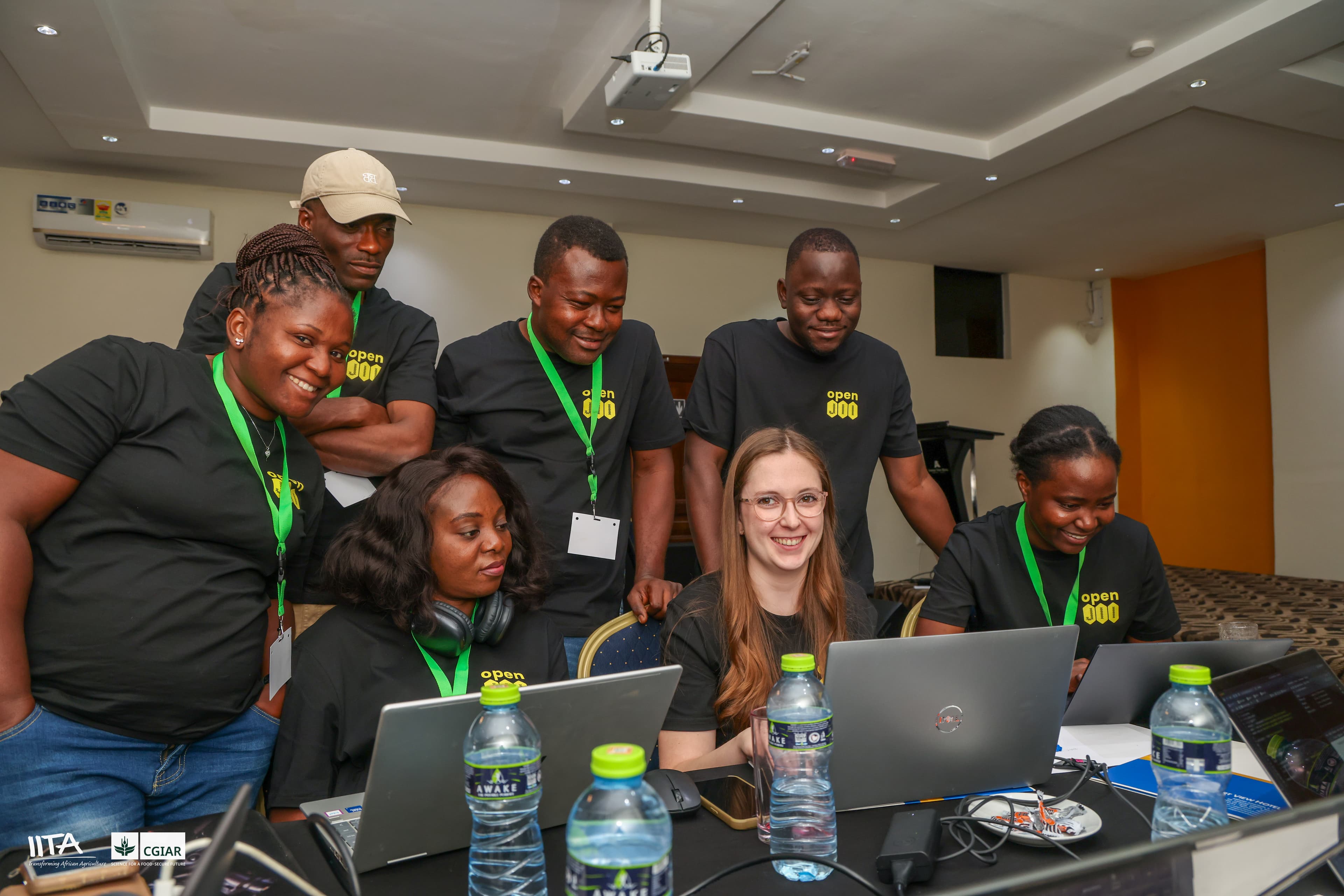
In contrast to most other hackathons, which are set up as competitions, the photosynthesis hackathon focused on advancing the objective by having teams present their findings each day and learn from one another. This allowed teams to overcome shared challenges more quickly, enabling everyone to work more efficiently.
Across six teams, participants tackled datasets from cowpea in Nigeria, barley in Ethiopia and the Netherlands, and potato from the Netherlands. The approaches were as diverse as the teams themselves, ranging from physiology-informed statistics to time-series AI foundation models. One team showed that looking at photosynthesis measurements over time, rather than at a single moment, dramatically improved the ability to distinguish between potato genotypes. Multiple teams independently discovered that an underexplored part of the fluorescence measurement carries rich genetic information, a finding that none of them expected going in.
Many participants had not worked with photosynthesis data before, and that turned out to be a strength: fresh perspectives led to creative approaches that specialists might not have considered. Following the final presentations, Anna Matuszynska (RWTH Aachen University) led a discussion on how to follow up on the results, what opportunities for collaboration there were, and what tools breeders would need for their research.
The hackathon is just the beginning. All participants will co-author a community publication documenting the methods and findings, and the organisers are exploring regional sensor hubs in Africa to make photosynthesis measurement tools more accessible to local research groups. The datasets and approaches developed during the hackathon will be shared through the OpenJII open-science platform, so that others can build on this work.
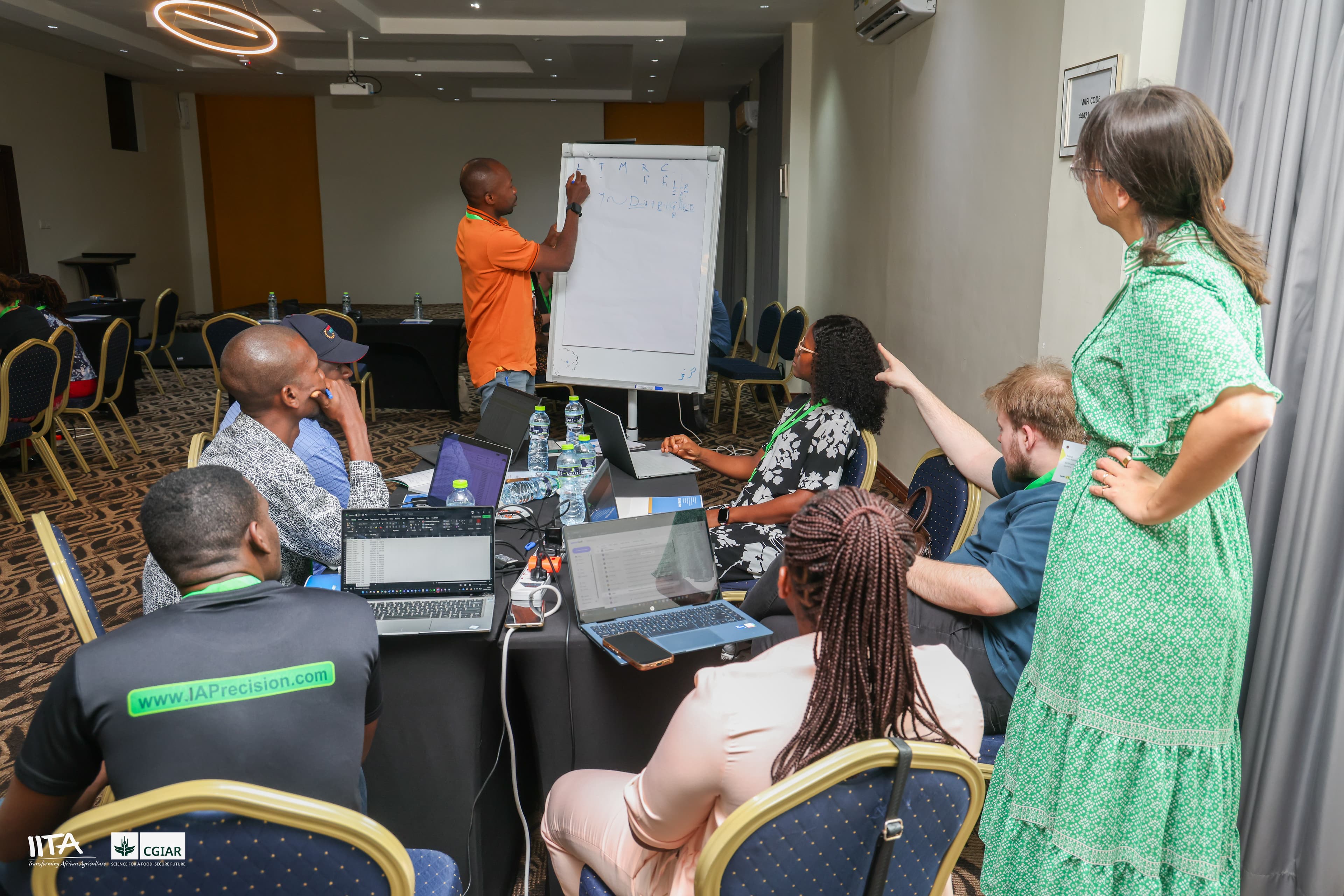
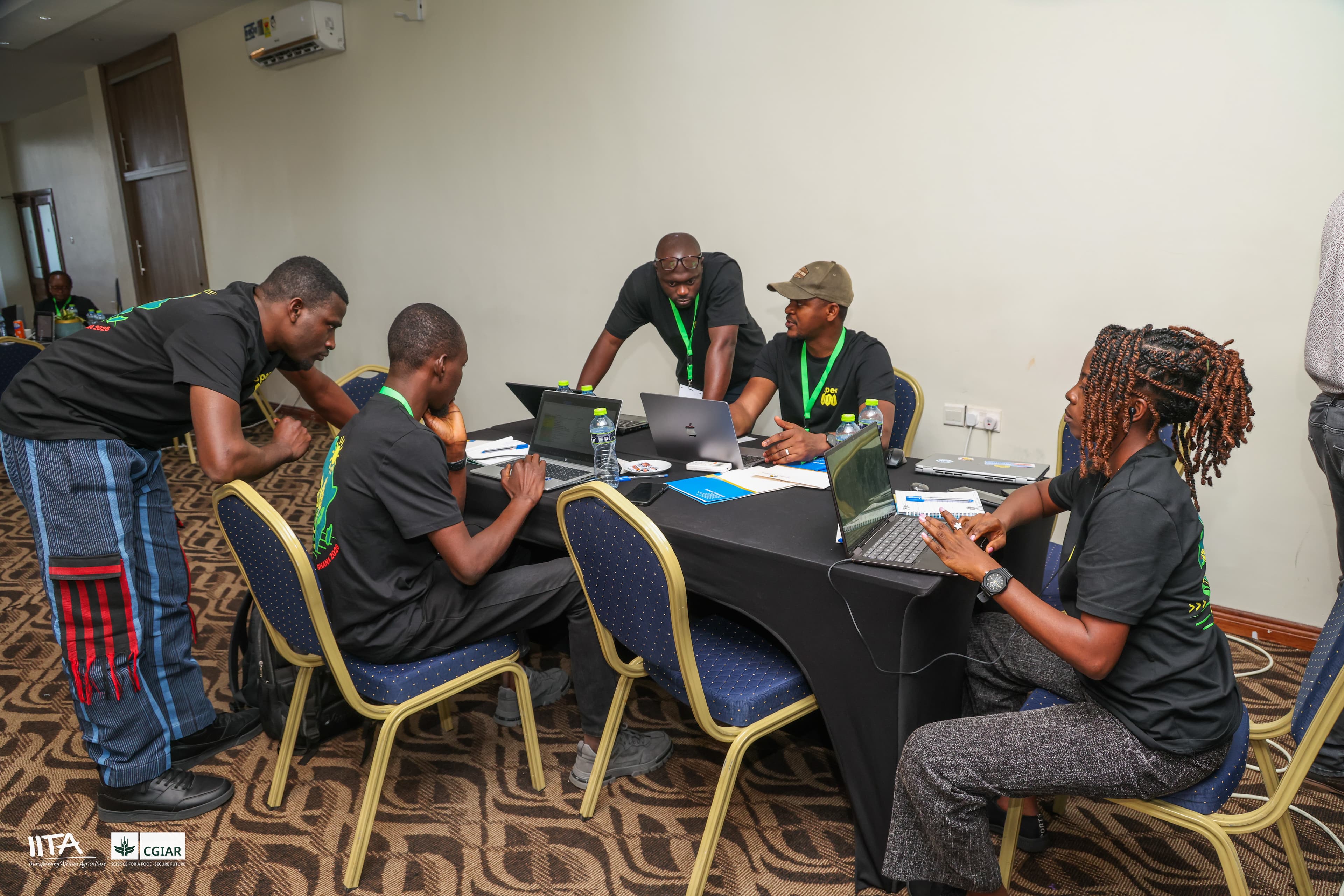
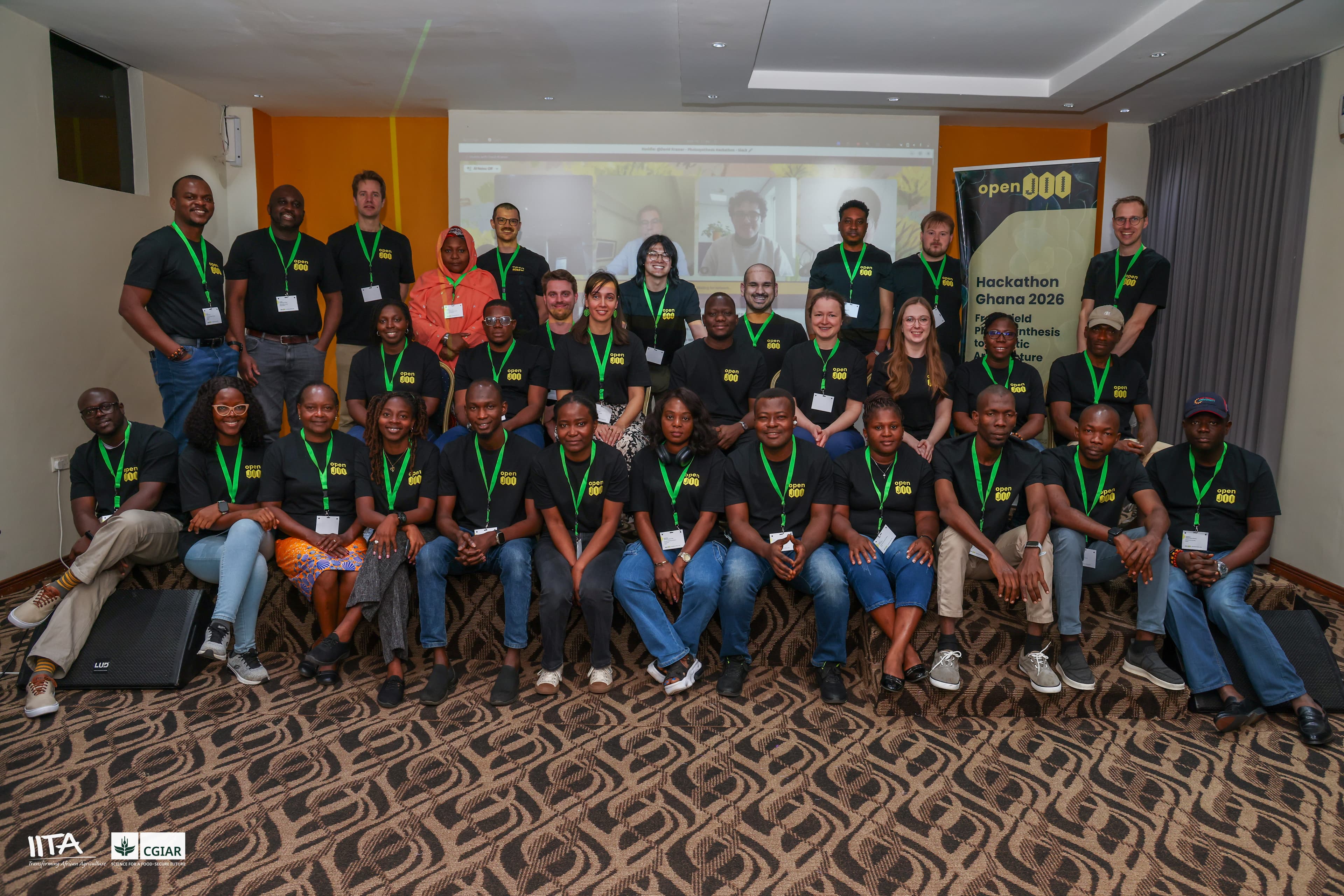
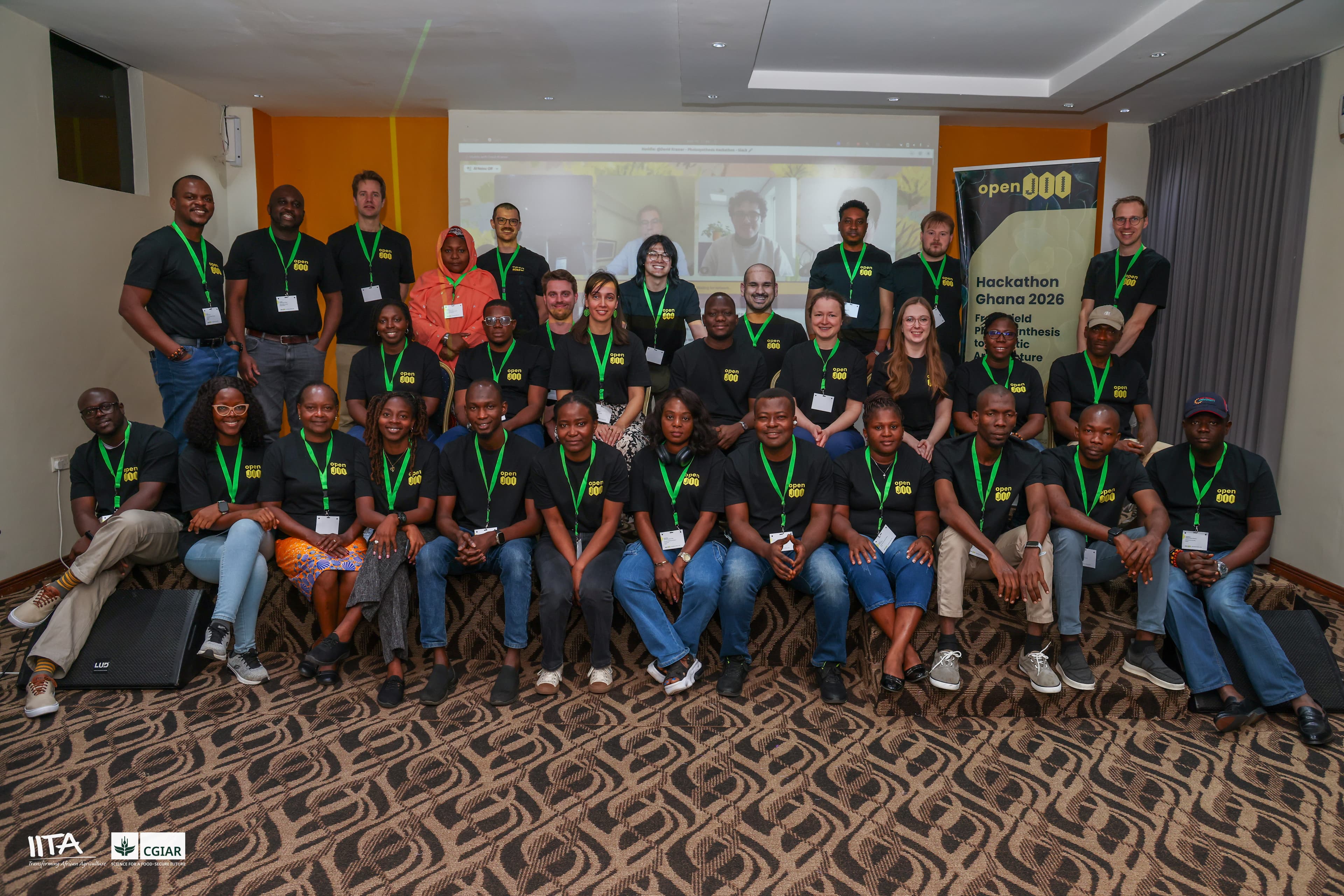
Participants at the international photosynthesis hackathon 2026. From left to right: Top row: Olakunle Sansa, Joseph Mhango, Johannes Kromdijk, Wajiha Abdullahi Muaz, Andris Finkbeiner, Marvin van Aalst, Jacky To, Dominik Vrbic, Olusegun Akinyemi, Elouen Corvest, Tom Theeuwen; Middle row: Georgina Lala Ehemba, Kenneth Chukwuka Mkpuma, Anna Matuszyńska, Thierry Hodehou, Zsa Zsa Boyny, Anika Unger, Omotola Dorcas Olaoye, Uchendu Ugochukwu Kelechi; Bottom row: Ifeoluwa Odesina, Ihuoma Ogechi, Regina Tende, Mary Olayinka, Kolawole Olalekan, Olivia Kacheyo, Adenike Oluwaseun Dada, Isaac Osei-Bonsu, Esther Anokye, Olukunle Babatunde Bashir, Solomon Ntukidem, Olalekan K.Obisesan. Photo credits: IITA-CGIAR.